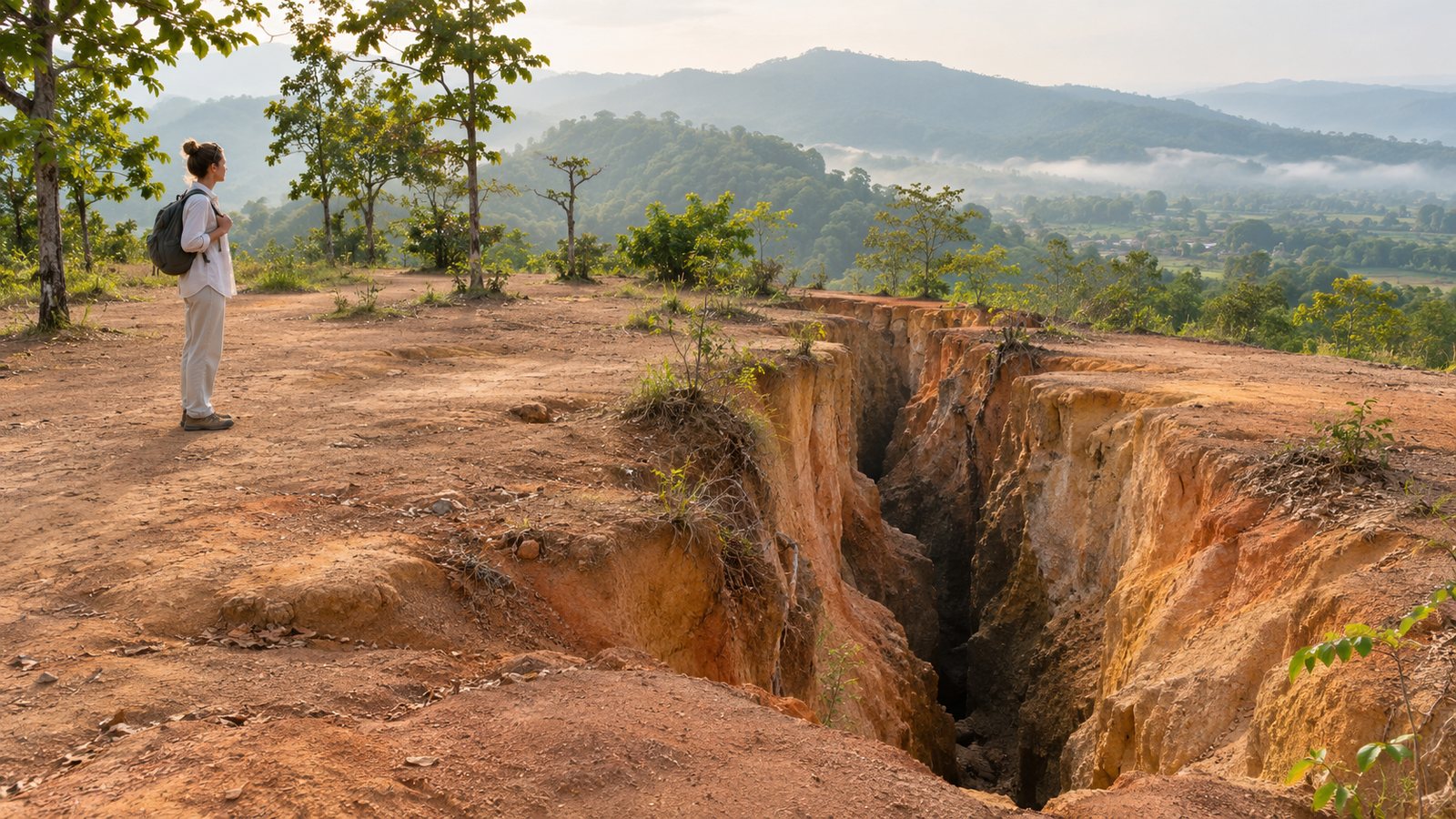
Pai’s countryside is a good place to slow down. Beyond the town’s cafés and evening market are farms, mountain views and short walks that show another side of Mae Hong Son province. One unusual stop is the area commonly known as Pai Land Split, where visitors have come to see a fissure in farmland.
A visit is best planned as a countryside stop rather than a guaranteed trek. Conditions, access and the wishes of landowners can change, so check locally before setting out. Recent local reports indicate that the fissure itself has been closed to visitors for several years and that the land is a private working farm. Do not enter a closed property or ignore a gate. If a nearby café or stall is open, that is not the same as permission to walk the fissure.
Finding the Land Split
The Land Split is associated with farmland outside Pai. Ask your accommodation or a local driver to confirm the current entrance, road and whether visitors are welcome on the day you plan to go. Do not assume that a pin on an old map identifies an open public footpath.
If you arrive at a closed entrance, respect it. This is somebody’s land, and a change in conditions or agricultural work may affect access. Ask permission before walking through fields or photographing people at work. Any food or products offered by a local host are at their discretion; do not assume a particular welcome, price or donation arrangement.
What sort of walk is it?
Uneven soil, steep edges and loose ground call for care even on a short visit. Wear shoes with grip, keep well back from fissure edges and stay on any marked route. After rain, a short path can be slippery. Do not enter cracks or cross barriers for a photograph.
We have not verified a current trail length, difficulty grade or opening time. Ask locally about access for children, older travellers and anyone with mobility concerns before making the journey.
Pair it with Pai Canyon
Pai Canyon, also called Kong Laen (sometimes written Kong Lan), is a separate landscape from the Land Split. The Tourism Authority of Thailand describes narrow, steep paths shaped by erosion. Some ridges have exposed drops; you can enjoy views without attempting the narrowest sections.
Set out early enough to return safely in daylight. If a viewpoint is crowded or the path feels unsafe, stop where you are comfortable. For a longer walk, ask a reputable local guide about an appropriate community route and its conditions rather than following an unverified trail online.
Getting around responsibly
Roads between Chiang Mai and Pai are winding and journeys can take longer than expected. Choose transport suited to your experience, allow time and avoid driving tired or in poor visibility. In the cooler months, take a light layer for morning and evening, water and sun protection for the warmer part of the day.
Check current weather and air quality, especially later in the dry season. A flexible plan gives you the freedom to choose a safe route—and leave time for a meal back in Pai.
